

History of The Knowle
The Knowle stands prominently in the village of Higham, Kent, its story intimately bound to one of England’s greatest writers and to a Victorian vicar whose influence shaped the parish for nearly half a century.
The Rev. Joseph Hindle Era (1829-1874)
The Knowle was built in the mid-19th century by the Rev. Joseph Hindle, who served as a vicar of Higham from 1829 to 1874—a remarkable 45-year tenure that remains the longest incumbency in the parish’s history. Born in 1795 into a landed family in Blackburn, Lancashire, Hindle’s personal wealth enabled him to play a transformative role in Higham’s development. He supported the building of the primary school in 1847, helped restore the 14th-century St Mary’s Church, and funded the construction of St John’s Church (consecrated in 1862) entirely from his own resources.
The Dickens Connection
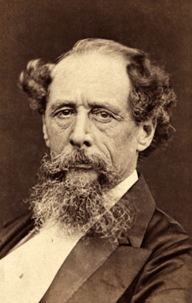
When Charles Dickens purchased Gads Hill Place in 1856 for £1,790, he found the Rev. Hindle already living there. Dickens had admired Gads Hill Place since childhood—his father had reportedly told him that if he worked hard enough, he might one day live in the imposing Georgian house. With characteristic generosity, Dickens allowed Hindle to remain at Gads Hill Place until March 1857, when The Knowle was completed and Hindle moved in.
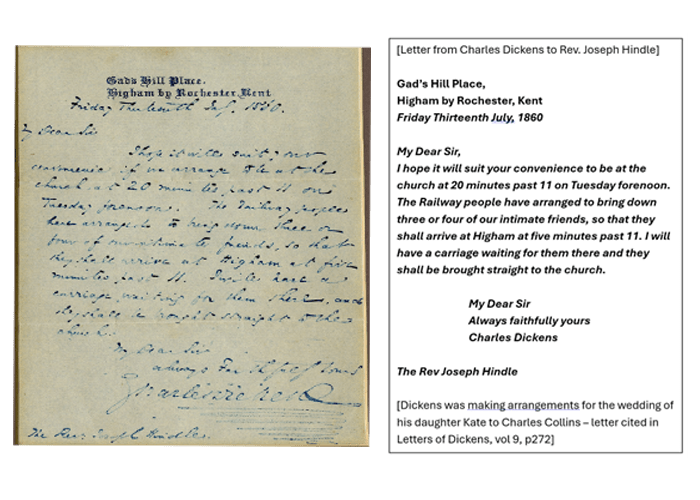
Letter from Charles Dickens to Rev. Joseph Hindle, Friday 13th July 1860. The letter demonstrates the cordial relationship between Charles Dickens and Rev. Hindle.
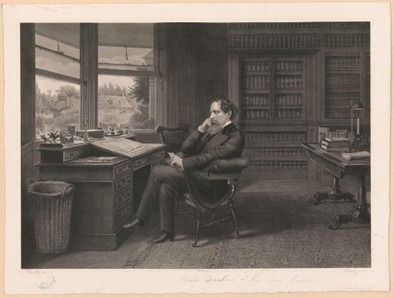
Charles Dickens in his study at Gads Hill Place, the house where Rev. Joseph Hindle was living when Dickens purchased it in 1856. Engraving by Samuel Hollyer, c.1875. Library of Congress
The building of The Knowle
The Knowle appears to have been completed in March 1857, and is believed to have been constructed using bricks salvaged from the old Rochester Bridge, which dated from 1388 and was demolished in 1856. The same builders, Foords, used these historic bricks to construct The Esplanade in Rochester, and the stonework at The Knowle bears a striking resemblance.
Living less than a mile from Gads Hill Place, Hindle and Dickens became neighbours. Their correspondence reveals a cordial and respectful relationship, with letters discussing property matters, hay supplies, and wine during the transition period. Dickens is said to have visited The Knowle and taken High Tea in what is now known as the Octagonal Room or Charles Dickens Room.
The Rosher Family (1856-1919)
In 1856, Joseph Hindle’s daughter Mary (1834-1919) married George Rosher (1832-1877) at Allhallows, Kent. George was the grandson of Jeremiah Rosher, a successful London lime and cement merchant whose business had been essential to the capital’s construction boom. After George’s death in 1877, Mary continued to live at The Knowle for over four decades until her passing in 1919.
Mary Rosher’s children endowed a memorial fund in her honour, providing prizes to pupils at Higham Primary School for their knowledge of the Holy Scriptures. With her death, the Rosher family’s long association with The Knowle came to an end.
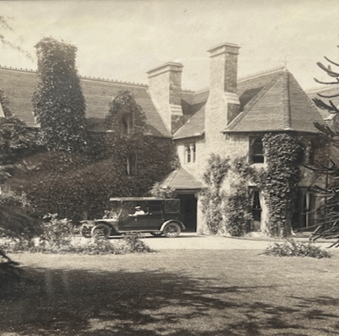
The Knowle. A photograph taken at the time the house was the home of the Rosher family.
The Twentieth Century
In the 1930s, The Knowle was acquired by the Brice family, local Kent fruit farmers. The Hunter family purchased the property in 1958.
A New Chapter: Michael Baragwanath and Family (1980-Present)
In 1980, Michael and Lynn Baragwanath transformed The Knowle from a private residence into the Country House Restaurant and Wedding Venue it remains today. Michael, who was articled to a chartered accountant and had worked for Athena Fine Art Prints, brought with him an extensive knowledge of antiques and a passion for collecting. Michael and Lynn’s collection of fine and decorative furniture and artworks furnished the house, contributing to its distinctive character and period atmosphere.
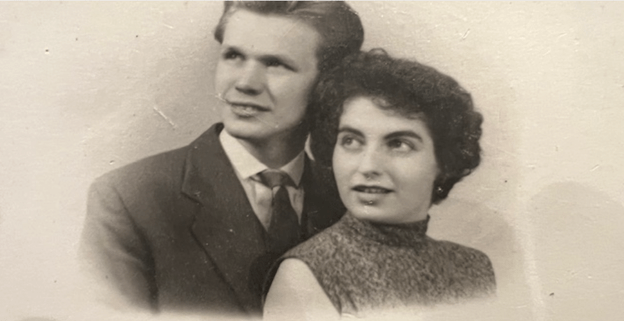
Michael and Lynn Baragwanath, who transformed The Knowle into a country house venue in 1980.
For over 46 years, Michael and family have maintained The Knowle’s heritage while welcoming guests to celebrate weddings, family gatherings, and memorial services within its historic rooms. The house, and its many acres of gardens, lawns, and orchards, continue to serve as they always have: as a place of gathering, with deep roots in Higham and an enduring connection to literary history.
Today, The Knowle remains what it has been for over a century and a half—a house with stories to tell and new memories to create.